Best Flooring Options for Basement Renovations in Airdrie
Choosing basement flooring is an important decision when finishing or updating the lower level of your home. Unlike flooring installed on upper storeys, basement materials sit below grade and may be exposed to cooler temperatures, concrete moisture and changing humidity levels.
A floor that looks attractive in a showroom may not perform well when installed directly over a basement slab. Homeowners must consider moisture resistance, warmth, comfort, durability and maintenance before selecting a product.
These considerations are especially relevant for basement renovations in Airdrie, where cold Alberta winters can make an improperly insulated basement floor uncomfortable. The right flooring system can make the basement feel warmer, protect the finished space and support how the room will be used.
This guide compares popular basement flooring options and explains what Airdrie homeowners should consider before installation.
Inspect the Basement Before Choosing Flooring
Before selecting a colour or material, inspect the condition of the concrete slab and surrounding foundation.
Look for signs of:
- Water stains
- White mineral deposits on concrete
- Musty odours
- Visible mould
- Cracks in the slab
- Uneven areas
- Previous flooding
- Moisture around floor drains
- Water entering near foundation walls
New flooring should not be installed over an unresolved moisture problem. Even materials marketed as water-resistant can be damaged if water becomes trapped underneath them. Moisture may also affect adhesives, underlayments and surrounding drywall.
If there is a history of water intrusion, identify the source before construction begins. The solution could involve improving exterior grading, extending downspouts, repairing foundation cracks or addressing interior drainage.
The slab should also be checked for levelness. Uneven concrete can cause floating floors to shift, separate or produce noise. Depending on its condition, the floor may need grinding, patching or levelling compound before the finished material is installed.
Luxury Vinyl Plank Flooring
Luxury vinyl plank is one of the most popular choices for finished basements. It provides the appearance of wood while offering better moisture resistance than traditional hardwood.
Its main advantages include:
- Strong moisture resistance
- Easy cleaning
- A wide selection of styles
- Good durability
- Compatibility with many basement uses
- Relatively quick installation
- Better resilience than ceramic tile
Luxury vinyl plank works well in recreation rooms, home offices, gyms, hallways and basement suites. It can also create visual continuity throughout an open-concept lower level.
However, vinyl flooring is not completely immune to water-related problems. Water can still become trapped beneath the planks following a leak or flood. The concrete slab must be prepared properly, and the manufacturer’s installation requirements should be followed.
Some products include attached underlay, while others require a separate layer. Homeowners should verify whether the selected flooring and underlayment are approved for below-grade installation.
Carpet and Carpet Tile
Carpet remains a popular basement option because it adds softness and warmth. It can make bedrooms, family rooms and children’s play areas feel more comfortable, particularly during colder months.
Benefits of carpet include:
- A warm surface underfoot
- Improved sound absorption
- Greater comfort for sitting or playing
- A wide variety of colours and textures
- Reduced echo in entertainment areas
Traditional broadloom carpet can create a comfortable living area, but it may be vulnerable to moisture. If water reaches the carpet and underpad, both materials may need to be removed to prevent odours and mould growth.
Carpet tiles offer an alternative. Individual damaged tiles can sometimes be lifted and replaced rather than removing the entire floor. This may be useful in home offices, playrooms and flexible multipurpose areas.
Carpet is generally best suited to dry basements with dependable moisture protection. It may not be ideal near laundry rooms, mechanical areas, exterior entrances or bathrooms.
Porcelain or Ceramic Tile
Tile is one of the most moisture-resistant basement flooring choices. It is commonly used in bathrooms, laundry rooms, kitchenettes and entrance areas.
Advantages include:
- Excellent water resistance
- Long service life
- Easy cleaning
- Resistance to stains
- Compatibility with in-floor heating
- A wide range of designs
The main drawback is that tile can feel cold and hard. This can be particularly noticeable during an Airdrie winter. Area rugs can improve comfort, while an approved radiant heating system may help create a warmer surface.
The concrete slab must be stable and properly prepared. Cracks or movement in the slab can eventually affect the tile or grout. An uncoupling membrane may be recommended in some situations to reduce the risk of cracks transferring through the finished floor.
Tile installation also involves more labour than many floating flooring products. Cutting, setting, grouting and curing can extend the renovation schedule.
Laminate Flooring
Laminate offers the appearance of wood at a relatively accessible price. Modern products are available in many colours, plank widths and textures.
Potential advantages include:
- Attractive wood-style finishes
- Comfortable appearance
- Straightforward maintenance
- Fast floating-floor installation
- Lower material cost than many hardwood products
Not every laminate product is suitable for a basement. Standard laminate can swell or deteriorate when exposed to moisture. Homeowners should select a product specifically approved for below-grade installation and review its water-resistance rating.
The vapour barrier and underlayment must also meet the flooring manufacturer’s requirements. Improper installation may affect both performance and warranty coverage.
Laminate is best considered for basements with a dry, stable slab and low risk of water intrusion.
Engineered Hardwood
Engineered hardwood is more dimensionally stable than traditional solid wood because it is manufactured in layers. It can offer the warmth and appearance of genuine wood in a finished basement.
Its benefits include:
- Authentic wood surface
- Premium appearance
- Multiple colours and species
- Better dimensional stability than solid hardwood
However, engineered hardwood is usually more expensive than vinyl or laminate and still requires dependable moisture control. Not all products are approved for below-grade installation.
For homeowners completing high-end Airdrie basement remodelling, engineered hardwood may be appropriate in a dry entertainment room, office or guest area. The slab should be tested, and the flooring supplier’s installation instructions must be followed carefully.
Solid hardwood is generally not recommended directly over a below-grade concrete slab because moisture and humidity changes can cause movement, warping or damage.
Rubber Flooring
Rubber flooring is a practical choice for basement gyms, workout rooms and children’s activity areas.
It offers:
- Impact absorption
- Slip resistance
- Protection for the floor underneath
- Reduced noise from weights and equipment
- Comfortable support during exercise
- Easy replacement when modular tiles are used
Rubber flooring is available in rolls, interlocking tiles and individual mats. Interlocking tiles are often convenient because they can be removed or replaced if necessary.
Homeowners should confirm that the product is suitable for indoor residential use. Some rubber products have a noticeable odour when first installed and may require ventilation.
Rubber is highly functional, but it may not provide the finished residential appearance preferred in family rooms or guest spaces. It is often used only in a designated gym area and paired with another flooring material throughout the rest of the basement.
Epoxy and Sealed Concrete
A polished or coated concrete floor can work well in workshops, utility rooms, modern recreation spaces and home gyms.
Possible advantages include:
- Strong durability
- Easy cleaning
- Resistance to many stains
- No need for a separate flooring layer
- A clean, contemporary appearance
Epoxy coatings require thorough concrete preparation. Moisture moving through the slab may cause some coatings to blister, lift or fail. The slab should be assessed before the coating is applied.
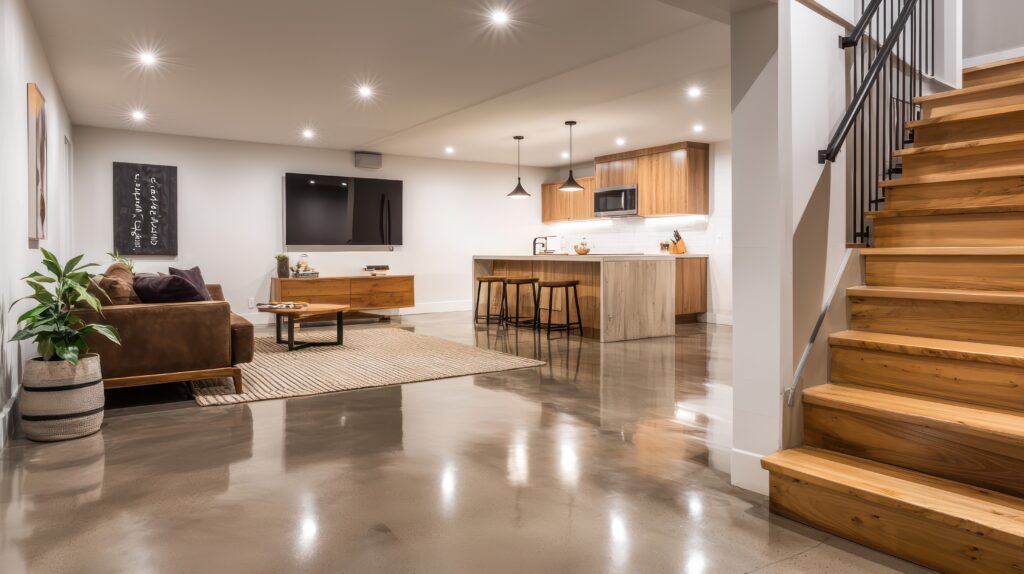
Concrete also feels hard and cold. Area rugs, foam mats or radiant heating can improve comfort in spaces used for extended periods.
This option may suit homeowners who want a durable, low-maintenance surface rather than a traditional residential floor.
Should You Install a Subfloor?
A basement subfloor creates a layer between the finished flooring and the concrete slab. Depending on the system, it may improve warmth, moisture management and comfort.
Common subfloor systems include:
- Modular subfloor panels
- Dimpled membranes
- Insulated panels
- Sleeper systems
- Approved underlayments
A subfloor may help reduce the cold feeling associated with concrete and provide a more comfortable walking surface. However, it also raises the finished floor height.
This height increase must be considered around:
- Stairs
- Doors
- Ceiling clearances
- Plumbing fixtures
- Mechanical equipment
- Built-in cabinets
- Existing floor transitions
The best system depends on the basement conditions and chosen flooring. The subfloor and finished product must be compatible, and all manufacturer instructions should be followed.
Match the Flooring to the Room
Using one flooring material throughout the basement can make the area feel larger, but different rooms may have different performance needs.
A practical combination could include:
- Luxury vinyl plank in the family room and hallways
- Carpet in bedrooms
- Tile in the bathroom and laundry room
- Rubber flooring in the gym
- Sealed concrete in the mechanical room
Transitions between materials should be planned before installation. Door clearances, floor heights and trim details all affect the finished appearance.
For an open-concept basement, selecting one durable flooring product for most of the space can create a cleaner and more consistent design.
Consider Maintenance and Long-Term Use
Think about who will use the basement and how much maintenance you are willing to perform.
Households with children or pets may prioritize:
- Scratch resistance
- Stain resistance
- Easy cleaning
- Replaceable sections
- Slip resistance
A rental suite may benefit from durable vinyl plank or tile because these materials are relatively easy to clean between occupants. A private family theatre may place greater emphasis on warmth and sound control, making carpet more appealing.
The least expensive material is not always the most economical long-term choice. A flooring product that needs to be replaced early because it was unsuitable for basement conditions may cost more over time.
Permits and Basement Development Requirements in Airdrie
Replacing finished flooring alone may not require the same approvals as a complete basement development. However, permits are required for basement development and renovation work involving new rooms, structural changes, plumbing, electrical systems or mechanical installations.
The City of Airdrie advises homeowners and contractors to obtain the appropriate permits before starting basement development work. Permitted projects require inspections, including an initial inspection before insulation or drywall conceals framing and trade rough-ins. The City also requires a mandatory final electrical inspection, with other final inspections depending on the project scope.
If the basement will contain a secondary suite, homeowners must first obtain an accessory-suite development permit and then apply for the basement building permit. Airdrie defines a secondary suite as a separate residence within the principal home that includes its own entrance, living, cooking, sleeping and sanitation facilities.
Flooring decisions should therefore be coordinated with the complete renovation plan. Installing a finished floor too early may create additional work if walls, plumbing or mechanical systems still need to be changed.
Find Trusted Basement Renovation Contractors in Airdrie
Selecting the right flooring is only one part of developing a comfortable and durable basement. Proper slab preparation, moisture management and installation are essential for protecting the finished material.
RenovationFind is an online directory that helps homeowners connect with certified, licensed and insured basement renovation companies in Airdrie. Companies listed on the platform are pre-screened for professional qualifications, legal compliance, reputation and customer satisfaction.
Working with an experienced contractor can help homeowners compare suitable flooring systems, identify moisture concerns and coordinate the installation with the rest of the renovation. Qualified professionals can also help ensure that permitted construction is completed in the proper order and inspected before it is concealed.
Visit RenovationFind to explore the top basement renovation contractors in Calgary and compare local professionals for your project.
Conclusion
The best flooring for an Airdrie basement depends on the condition of the concrete slab, the intended use of the room and the level of moisture protection in the home.
Luxury vinyl plank is a versatile option for many finished spaces, while carpet adds warmth to bedrooms and family rooms. Tile performs well in bathrooms and laundry areas, and rubber flooring offers practical protection in home gyms. Engineered hardwood, laminate and coated concrete may also be suitable when installed under the correct conditions.
Before making a final choice, inspect the basement for moisture, confirm that the flooring is approved for below-grade use and plan any required subfloor system carefully. Professional preparation and installation can help the finished floor remain comfortable, attractive and durable for years.